Importance of Fabric Reinforcement in Retaining Wall Construction
Introduction
Retaining walls are vital structures in civil engineering and landscaping, designed to hold back soil and prevent erosion on slopes. They provide stability to embankments, highways, and gardens while improving land usability. However, to enhance the performance and durability of these walls, the use of advanced materials has become increasingly common. One such material is the geotextile in retaining wall applications, which acts as a protective and reinforcing layer. It not only strengthens the wall but also ensures proper drainage and soil separation, reducing long-term maintenance requirements.
Understanding the Function of Fabric Layers
The main purpose of adding fabric layers behind retaining walls is to manage water movement and maintain soil stability. When rainfall or irrigation water seeps into the soil, it can exert hydrostatic pressure on the wall, leading to cracks or even collapse. The geotextile in retaining wall installations helps mitigate this by allowing water to pass through while preventing fine soil particles from washing away. This ensures that the wall remains stable and the drainage system functions efficiently over time.
See also: Building a Strong Digital Foundation for Business Success
Types of Fabrics Used
The geotextile in retaining wall systems can be broadly classified into two main types: woven and non-woven.
Woven Fabrics
Woven fabrics are created by interlacing synthetic fibers like polypropylene or polyester in a structured pattern. These fabrics are strong, durable, and capable of withstanding significant tensile stresses. They are primarily used in retaining walls that require high load-bearing strength and soil reinforcement.
Non-Woven Fabrics
Non-woven fabrics are produced through a needle-punching or heat-bonding process. They are highly permeable, making them ideal for filtration and drainage purposes. These fabrics prevent soil from clogging the drainage layer, thereby maintaining the wall’s stability.
Advantages of Using Fabric Layers in Retaining Walls
1. Enhanced Drainage Efficiency
The geotextile in retaining wall ensures that excess water escapes without allowing soil particles to pass through. This filtration process minimizes water pressure and protects the structure from potential damage caused by saturation.
2. Improved Soil Separation
When constructing a retaining wall, different materials such as soil and gravel are used. The geotextile fabric acts as a separator between these materials, preventing them from mixing. This separation enhances compaction and ensures uniform wall performance over time.
3. Long-Term Durability
The synthetic fibers used in geotextile fabrics are resistant to decay, chemicals, and biological degradation. This makes them highly durable even in extreme environmental conditions. Once installed, they provide long-lasting support without frequent maintenance.
4. Cost-Effective Maintenance
Since the geotextile helps manage water flow and soil stability, it reduces the chances of wall failure. This significantly lowers maintenance and repair costs, making it a cost-effective choice for both residential and commercial projects.
Installation Process
Step 1: Site Preparation
Before installation, the construction area should be cleared of debris, roots, and sharp objects that may damage the fabric. The base should be properly leveled and compacted to provide a stable foundation.
Step 2: Placement of Fabric
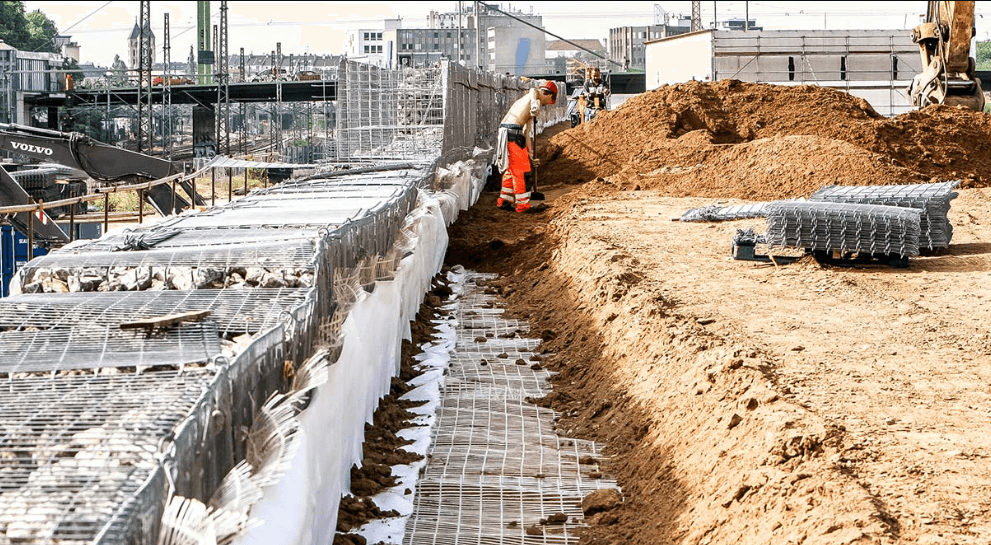
The geotextile in retaining wall is positioned between the backfill soil and the drainage material. It must cover the full height of the wall with a sufficient overlap between adjacent sheets to ensure continuity.
Step 3: Adding Drainage and Backfill Layers
A layer of gravel or crushed stone is placed against the wall to act as the drainage layer. The soil is then backfilled behind the fabric in compacted layers to ensure stability.
Step 4: Finishing Touches
After installation, the top edge of the fabric should be properly secured and covered to prevent exposure to sunlight or external damage. A proper inspection helps ensure the material functions as intended.
Key Factors to Consider When Choosing Fabric
Selecting the right type of fabric is essential for achieving desired performance. Important factors to consider include:
- Permeability: The ability of the fabric to allow water to pass through while blocking soil particles.
- Tensile Strength: Determines how much force the fabric can withstand before tearing.
- Chemical Resistance: Ensures the fabric’s durability against exposure to various soil conditions and contaminants.
- UV Resistance: Helps the fabric maintain strength when exposed to sunlight during or after installation.
Common Mistakes to Avoid During Installation
- Incorrect Overlap: Failing to overlap adjacent fabric sheets can cause gaps that allow soil leakage.
- Poor Alignment: Misaligned fabric can lead to uneven pressure distribution on the wall.
- Use of Low-Quality Material: Inferior geotextile products may degrade quickly, reducing their effectiveness.
- Insufficient Drainage Layer: Without adequate drainage, water can accumulate behind the wall, causing damage even if fabric is used.
Environmental and Structural Benefits
The use of geotextile in retaining wall structures contributes to sustainable construction. By controlling erosion and maintaining natural drainage, it helps preserve the surrounding ecosystem. Additionally, it minimizes the need for chemical soil stabilizers and extensive maintenance, reducing environmental impact. From an engineering perspective, it strengthens the wall foundation and extends its lifespan, making it a reliable component in modern infrastructure.
Real-World Applications
Geotextile fabrics are widely used in both small-scale and large-scale retaining wall projects. In residential landscaping, they enhance garden walls and terraces by preventing soil erosion. In large civil projects, such as highways and railway embankments, they provide stability on slopes and prevent washouts during heavy rainfall.
Conclusion
Incorporating the geotextile in retaining wall construction is a practical and effective approach to improving durability, drainage, and soil stability. It ensures that the wall remains strong and functional even in challenging environmental conditions. By selecting the right type of fabric, following correct installation methods, and avoiding common mistakes, engineers and builders can create structures that stand the test of time. This simple yet efficient addition has transformed how retaining walls are built, offering long-lasting protection and sustainability in modern construction.